News

PRESS RELEASE: Christian environmental and development groups welcome Church of Scotland decision to set 2030 net zero target

Posted in: News
Date posted: 3 October 2020

Saturday 3 October 2020

For immediate release

Contacts:

Leanne Clelland, Christian Aid Scotland, 07835 123773

James Buchanan, Operation Noah, 07801 570653

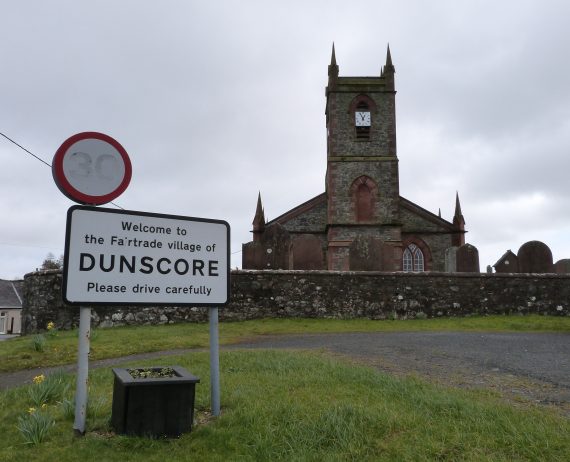
Dunscore Parish Church has already committed to divest from fossil fuels

Christian environmental and development charities Christian Aid, Eco-Congregation Scotland and Operation Noah joyfully welcome the decision of the Church of Scotland to set a 2030 net zero target.

At the Church of Scotland 2020 General Assembly today, the Church’s Faith Impact Forum brought a proposal to the General Assembly ‘for the Church to transition both locally and nationally to net zero carbon emissions by 2030’.

General Assembly Commissioners voted to support an amendment from Rev Jenny Adams, Minister of Duffus, Spynie and Hopeman Parish Church.

The amended motion passed by General Assembly reads: ‘Instruct the Faith Impact Forum to work with others to develop a strategy for the Church to transition both locally and nationally to net zero carbon emissions by 2030, reporting an outline strategy to General Assembly 2021.’

The decision to set a 2030 net zero target is especially significant as Glasgow prepares to host the UN climate talks, COP26, in November 2021.

In her speech to the General Assembly, Rev Jenny Adams said: ‘This is a climate emergency and the next 10 years are crucial. I hope that by working with others within and beyond the Church, we will be able to get going on this difficult but vital transition, for the sake of all creation.’

Commissioners at the General Assembly also voted in favour of a motion on fossil fuel divestment proposed by Seonaid Knox. This motion called on the Church’s Faith Impact Forum to ‘report to the 2021 General Assembly on the ethical, scientific and theological arguments for and against urgent disinvestment from oil and gas companies’.

The Church of England voted to set a 2030 net zero target earlier this year. Many local authorities have also made this pledge, including the City Councils of Edinburgh and Glasgow.

Christian Aid, Eco-Congregation Scotland and Operation Noah applauded the decision to set a 2030 net zero target. They said that the Church of Scotland now needs to end its investments in fossil fuel companies in order to demonstrate climate leadership ahead of the crucial COP26 climate summit.

Sally Foster-Fulton, Head of Christian Aid Scotland, said: ‘The communities with which Christian Aid works, in many of the poorest parts of the world, are calling for urgent leadership on climate change, and this decision from the Church of Scotland demonstrates that leadership. We welcome it warmly, and look forward to working in partnership with the Church of Scotland to help realise these ambitious new goals. One of the steps that the Church could take in the short-term is to commit to end its investments in fossil fuel companies, and we hope that is part of the plans brought forward in 2021.’

Mary Sweetland, Chair of Eco-Congregation Scotland, said: ‘We are delighted that one of our key partner Churches has committed to transitioning to net zero in the next 10 years.’

James Buchanan, Bright Now Campaign Manager at Operation Noah, said: ‘It is wonderful news that the Church of Scotland has set a target of reaching net zero emissions by 2030. In order to demonstrate leadership on the climate crisis ahead of the UN climate talks in Glasgow next year, it is vital that the Church of Scotland supports a just and green recovery from Covid-19 by divesting from fossil fuel companies and investing in the clean technologies of the future.’

ENDS

Notes for editors:

1. Operation Noah is a Christian charity working with the Church to inspire action on the climate crisis. It works with all Christian denominations.

2. Christian Aid holds a vision of a better world, free from poverty and climate change. For over ten years, Christian Aid Scotland has been campaigning for the UK and Scottish Governments to take climate change seriously for the benefit of those who are impacted first and worst by its effects.

3. Eco-Congregation Scotland is a movement of Scottish church congregations, of all denominations and none, committed to addressing environmental issues through their life and mission.

4. The Church of Scotland’s Church and Society Council recommended that the Investors’ Trust divest from fossil fuels ‘as a matter of urgency’ in December 2019.

5. The Church of England set a 2030 net zero carbon target in February 2020.

PRESS RELEASE: Faith institutions call for a just recovery by divesting from fossil fuels

Posted in: News

The following is a joint press release by the Global Catholic Climate Movement, Operation Noah, Green Anglicans and GreenFaith.

18 May 2020

For immediate release

UK Contact: James Buchanan, Operation Noah

james.buchanan@operationnoah.org, +44 7801 570 653

Faith institutions call for a just recovery by divesting from fossil fuels
Bailouts and recovery packages must not empower polluters

As major challenges for the global economy are predicted in the wake of the coronavirus pandemic, a diverse group of faith institutions is putting the call for a just economic recovery into practice.

Today, 42 faith institutions from 14 countries announce their divestment from fossil fuels. This is the largest-ever joint announcement of divestment from fossil fuels from faith institutions. It comes from institutions in Argentina, Australia, Bangladesh, Brazil, Colombia, Ecuador, Indonesia, Ireland, Italy, Kenya, Myanmar, Spain, the UK, and the United States.

As governments around the world make substantial investments in an economic recovery, faith communities urge them to think long term and focus on a recovery that is low-carbon and just. 

Mark Campanale, Founder and Executive Chair of Carbon Tracker, an independent think tank that analyzes the financial impact of an energy transition, said, “A comprehensive economic recovery means taking the long view, investing now in infrastructure that will serve communities for years to come. Fossil fuels do not have a place in the long-term health of humanity. Faith institutions’ commitment to create a better world is leadership that governments should follow.”

Earlier this month, a new report from Operation Noah showed that none of the major oil companies are compliant with the Paris agreement targets. The former Archbishop of Canterbury, Rt Revd Dr Rowan Williams, said in response to the report, “The current health crisis has highlighted as never before the need for coherent international action in the face of global threat. Can we learn the lesson and apply it to the global threat of climate change? To do so means taking practical and effective steps to reduce our lethal dependence on fossil fuels.”

Today’s multi-faith announcement comes from Methodist, Anglican, Catholic and Buddhist  institutions, among others. The group includes the Jesuits in Britain, which divested its £400 million ($517.5 million) equity portfolio from fossil fuels in February 2020.

Illustrating the need for a just recovery, the Episcopal Commission for Justice and Peace in Bangladesh is among those committing to divest from fossil fuels. 

Bangladesh is home to the world’s largest refugee camp, where more than half a million people live near the Bay of Bengal. The Bay of Bengal is extremely vulnerable to the greater risk of catastrophic storms that come with climate change. A viral pandemic and a catastrophic storm would bring one of the world’s most vulnerable communities to a halt, illustrating the need to repair the faults that have left economies near the breaking point. 

Father Endra Wijayanta, director of the Justice, Peace, and Integrity of Creation Commission for the Archdiocese of Semarang, in Indonesia, said, “In this COVID-19 pandemic, it is the exact time not only to reflect, but to act. We have to stop our ecological spiral of death. We have to revive our ecological hope, in massive repentance of humankind, by taking the pathway to more sustainable living.”

Faith communities have long taken the lead in the global divestment movement, and have contributed the single greatest number of commitments, with over 350 commitments in the global total of over 1,400. Today’s action by faith institutions puts pressure on governments around the world to enact policies that will lead to a comprehensive and resilient recovery. 

Catholics’ participation is especially resonant as today marks the start of Laudato Si’ Week, a global commemoration of the fifth anniversary of Laudato Si’, Pope Francis’ encyclical on climate change and ecology. After being invited to participate in Laudato Si’ Week by Pope Francis, Catholics have taken up the project to build a more just and sustainable future together. In the last month, 21 Catholic organizations with $40 billion in assets under management committed to invest in companies that align with their values by signing the Catholic Impact Investing Pledge

A full list of the 42 institutions divesting from fossil fuels and statements from leaders can be found here.

Statements from leaders:

Tomás Insua, executive director of Global Catholic Climate Movement, said: “Every dollar invested in fossil fuels is a vote for suffering. These institutions are taking prophetic action to light the way towards a more just and sustainable future because now more than ever, we need to protect our communities and build a just recovery together.”

James Buchanan, Bright Now Campaign Manager at Operation Noah, said: “The decisions we make now will affect the future of humanity for thousands of years. These faith institutions are showing strong leadership in response to the climate crisis, and we urge governments around the world to follow their lead in ending support for fossil fuels and investing in the clean technologies of the future.”

Prof. Dr Isabel Apawo Phiri, World Council of Churches Deputy General Secretary said: “We reiterate the urgent concerns of Christians around the world in relation to climate change and its adverse effects on the whole of creation. The moral imperative of fossil fuel divestment and of investing in a low-carbon path to realizing economic, social, and ecological wellbeing and sustainability for the whole creation is more urgent than never.”

Rev Rachel Mash, Coordinator of Green Anglicans (Anglican Church of Southern Africa), said: “The COVID-19 crisis shows us that our current way of living is unsustainable, we are sick because the Earth is sick.  We cannot go back to normal, we must grow back to a new way of sustainable living. As we move into a post COVID-19 era, we must move away from sources of energy that contribute to climate change and air pollution.”

Reverend Fletcher Harper, Executive Director of Green Faith, said: “Extractive corporations, and the banks that finance them, are demanding government bailouts and the dismantling of environmental protections in the middle of a global pandemic and economic collapse. The idea that precious funds should bail out the world’s wealthiest corporations, not the people whose lives are at stake, is hard to fathom. This injustice is wrong. This is the time to rethink how we relate to one another and the earth. The religious groups announcing their divestment from fossil fuels today are stepping into the breach at a time when nothing is the same and everything has to change.”

Yossi Cadan, Global Finance Campaign Manager at 350.org, said: “Once again, faith groups continue to lead the way and clearly indicate to the rest of the world that any future investments or stimulus funds must exclude fossil fuels and yield long-term structural emissions reductions. The solutions to the economic crisis are the solutions to the climate crisis. The economic downturn must be an opportunity to accelerate the transition needed towards low- and zero-carbon. And any financial intervention, including investors, needs to put people and their livelihoods front and center.”

ENDS

Contact: james.buchanan@operationnoah.org, +44 7801 570 653

PRESS RELEASE: New report calls on Churches to urgently divest from fossil fuels

Posted in: News
Date posted: 6 May 2020

Wednesday 6 May 2020

Contact James Buchanan: 07801 570 653 / james.buchanan@operationnoah.org

Report available:

Interviews available / Quote from Rt Revd Dr Rowan Williams below

A new report from Operation Noah, the Christian climate change charity, is calling on Churches in the UK to urgently divest from fossil fuels in response to the climate emergency.

The report, ‘Church investments in major oil companies: Paris compliant or Paris defiant?’, shows the gap between the business plans of major oil companies and the Paris Agreement targets, which commits to limit global average temperature increases to well below 2°C compared with pre-industrial levels, and aims for 1.5°C.

The report draws on research from a variety of key sources, including Carbon Tracker’s Breaking the Habit report and the Transition Pathway Initiative (TPI) 2020 State of Transition Report, both of which demonstrate that none of the major oil companies are aligned with the Paris Agreement targets.

The report is published as several major oil companies are set to hold their AGMs, including Shell (Tuesday 19 May), BP and ExxonMobil (Wednesday 27 May) and Total (Friday 29 May). It shows that Shell and BP intend to increase oil and gas production by 38% and 20% respectively between 2018 and 2030, when global carbon emissions must fall by 55% by 2030 in order to limit the global average temperature rise to 1.5°C, according to the 2019 UN Emissions Gap report.

The report highlights that Shell and BP plan to spend huge sums on exploration and extraction of new reserves between now and 2030 ($149 billion and $71 billion respectively), when scientists are warning that the majority of known fossil fuel reserves must remain in the ground.

The report also draws attention to the fact that BP and Shell, which spend most among the major oil companies on lobbying against climate action, belong to trade associations such as the American Petroleum Institute that have successfully lobbied for weaker environmental regulation during the Covid-19 crisis. The report strengthens the calls for bailouts to support workers, but not oil and gas corporations.

Several UK Churches have already completed the process of divestment from fossil fuels, including Quakers in Britain, the Church of Ireland and the United Reformed Church. In others, such as the Church of Scotland, the Church in Wales and the Scottish Episcopal Church, Church bodies have made divestment recommendations, which should be acted on as a matter of urgency. Two Catholic dioceses in England and Wales have so far divested from fossil fuels, and the report calls on the remaining dioceses to join them – and 150 other Catholic institutions around the world – in making divestment commitments.

The 2017 Methodist Conference called for the Central Finance Board of the Methodist Church to divest from oil and gas companies whose business investment plans were not aligned with the Paris Agreement target of a global temperature rise well below 2°C by 2020. In light of the research outlined, the report calls on the Methodist Church to divest from all fossil fuel companies now.

The Church of England General Synod in July 2018 voted to begin divestment in 2020 from oil and gas companies that are ‘not taking seriously their responsibilities’ in the transition to a low-carbon economy, and complete divestment from those not on track to align with the Paris Agreement by 2023. The report argues that none of the major oil companies are taking their responsibilities seriously, and the divestment process must begin now.

James Buchanan, Operation Noah’s Bright Now Campaign Manager, said: ‘All major oil companies continue to spend huge sums on the exploration and extraction of new fossil fuel reserves, as well as lobbying against climate action. The evidence is overwhelming that none of these companies are ‘Paris compliant’. We strongly encourage Churches to demonstrate moral leadership at this key moment in history by divesting from fossil fuels and investing in the clean technologies of the future.’

Rt Revd Dr Rowan Williams, former Archbishop of Canterbury, said: ‘The current health crisis has highlighted as never before the need for coherent international action in the face of global threat. Can we learn the lesson and apply it to the global threat of climate change? To do so means taking practical and effective steps to reduce our lethal dependence on fossil fuels, and this report challenges the Churches to take these steps as a matter of urgency.’

Ends

Contact James Buchanan: james.buchanan@operationnoah.org or 07801 570 653

Notes for editors:

1. Operation Noah is a Christian charity working with the Church to inspire action on climate change. It works with all Christian denominations. http://operationnoah.org/

2. The report can be downloaded at: https://brightnow.org.uk/resource/church-investments-in-oil-paris-compliant-or-paris-defiant/.

3. The Methodist Conference in June 2017 called for the Central Finance Board of the Methodist Church to divest from oil and gas companies whose business investment plans were not aligned with the Paris Agreement target of a global temperature rise well below 2°C by 2020. https://brightnow.org.uk/news/methodist-church-takes-step-closer-divestment/

4. The Church of England General Synod in July 2018 voted to begin divestment in 2020 from oil and gas companies that are ‘not taking seriously their responsibilities’ in the transition to a low-carbon economy, and to complete divestment from those not on track to align with the Paris Agreement by 2023. https://brightnow.org.uk/news/church-of-england-votes-for-fossil-fuel-divestment/

5. The American Petroleum Institute has lobbied for weaker environmental regulation during the Covid-19 crisis. https://www.theguardian.com/environment/2020/apr/17/polluter-bailouts-and-lobbying-during-covid-19-pandemic

6. Several European countries have recently spoken of the ‘duty’ of governments to build climate-resilient economies post Covid-19 https://www.theguardian.com/environment/2020/apr/28/un-chief-dont-use-taxpayer-money-to-save-polluting-industries

Operation Noah supports ‘Teach the Future’

Posted in: News
Date posted: 4 May 2020

As young people around the world have responded to the action initiated by Swedish schoolgirl Greta Thunberg with widespread school climate strikes, it has become increasingly clear that the climate crisis is a major concern for the young. They know that their education will have limited value in a world of the future if climate change is not tackled and here in the UK they are calling for the education system to inform them and prepare them.

At Operation Noah we recognise how important it is that young people have a voice on these issues and we are pleased to support the student-led campaign, Teach the Future.

The Church Still Needs to Lead on Action on Climate Change

Posted in: Articles, Blog, News
Date posted: 23 April 2020

A new poll has found that almost half the public believe the Government should respond with the same urgency to climate change as it has with Covid-19. Forty-eight per cent of those polled agreed with this statement, with only 28 per cent disagreeing.

The poll, which was carried out by Opinium and commissioned by the Compassion in Politics Podcast, provides a green light to the Government to take strong action to tackle the climate crisis, even as we also tackle the coronavirus pandemic.

At the same time, a YouGov poll commissioned by The Royal Society of Arts, found that only nine per cent of the population want life to return to normal after lockdown. The overwhelming majority, 85 per cent, would like us to learn from lockdown and retain some of the personal and social changes we have gained, such as cleaner air, stronger communities and seeing more wildlife.

Matthew Taylor, Chief Executive of the RSA, said: ‘Amid the awful news and general doom, we must use this time to imagine a better future. This poll shows that the British people are increasingly aware that the health of people and planet are inseparable and it’s time for radical environmental, social, political and economic change.’

At Operation Noah we believe the Church, as stewards of creation, needs to lead on taking drastic action on climate change. The pandemic, and subsequent lockdown in many countries, is estimated to reduce global carbon emissions by 5.5 per cent in 2020, yet scientists are calling for cuts of 7.6 per cent every year to keep global average temperatures from rising above 1.5°C above pre-industrial levels. Clearly, we have a long way to go. We have joined a number of other organisations in calling for a ‘Just Recovery’ from Covid-19 which puts the welfare of people and planet at its heart. Individuals can also sign up to this call – will you join us?

Sir John Houghton (1931-2020)

Posted in: News

The eminent meteorologist, climate change expert and Christian, Sir John Houghton, has died at the age of 88 of suspected Covid-19. Sir John was a Patron of Operation Noah.

Among many achievements, he was co-chair of the Intergovernmental Panel on Climate Change’s (IPCC) scientific assessment working group and lead editor of the first three IPCC reports. In December 2007 he received the Nobel Peace Prize as part of the IPCC delegation, alongside the former vice-president of the United States of America, Al Gore. He was also professor in atmospheric physics at the University of Oxford and Chief Executive of the Met Office.

Sir John firmly believed that faith and science belong together. He founded the John Ray Initiative (JRI), an organisation connecting environment, science and Christianity, in 1998.

Paul Bodenham, Operation Noah founder, recalls: ‘John spent many hours, over many years, touring churches in Britain and the United States, making the case for Christians to act on climate change. It was a ministry in which he was quietly tenacious, and I was struck by the integrity with which he spoke, fully both a scientist and a disciple. He was opening speaker at the launch of Operation Noah in 2004, while it was still a project of Green Christian, and featured in the campaign video which followed. It is no exaggeration to say that John was instrumental in the churches in the UK finding their voice on climate change.’

Sister Louisa Poole, an Operation Noah Board Member, said: ‘We owe him a lot in being the first scientist who took a public stand. He supported Operation Noah hugely, often mentioned us, and tirelessly appeared to speak to groups large and small.’

In a moving tribute on Twitter, Sir John’s granddaughter, Hannah Malcolm, quoted him as saying of his time at university: ‘Science was a voyage of discovery to the way the universe worked, and it was God’s universe, then it was studying the works of God, and that’s something that stuck with me.’

She also said: ‘My… consistent memory will be his deep faith that he was doing work in service of the God he loved, and in service of the world he loved.’

The Church Times has republished an interview with Sir John, which took place in 2013 at the time of the publication of his autobiography In the Eye of the Storm.

Here at Operation Noah our thoughts and prayers are with Sir John’s family at this time.

Registered charity number 1138101