
Operation Noah Trustee Shilpita Mathews preached the following sermon at Raleigh Road United Church in Richmond, London in August 2021 as part of that church’s Climate Sunday service. Portions of the sermon have been adapted from Climate Sunday resources provided by Tearfund.
By Shilpita Mathews
Scripture passages: Psalm 104:1,10–26; Mark 4:1–10, 13–20
Good morning everyone, it is a privilege to be speaking to you today on behalf of Operation Noah, a Christian charity working with the church to inspire action on the climate crisis.
I wonder what climate change means to you? Despite the irrefutable scientific evidence, such as the Intergovernmental Panel on Climate Change’s recent report, I’ve found that our understanding of global challenges are often rooted in personal ‘climate stories’.
My journey started with viewing the impacts of natural disasters first hand, as an 8-year old, following the Boxing Day tsunami in Sri Lanka in 2004. The devastation of lives, homes and livelihoods made me wonder: how could God allow such suffering and destruction to occur?
We know that such natural disasters are only going to increase in frequency and severity over time as a result of climate change.
Today, we are going to reflect on what the Bible has to say about this by considering three ‘Rs’. I know you may be thinking that I’m going to say, reduce, reuse, recycle, as that would fit with the theme of today’s service, but what I would like us to consider are God’s call to rejoice, repent and respond.
1. REJOICE
Our readings from Psalm 104 and Mark 4 vary in many ways: their purpose, their setting, and when they were written. But they also have a lot in common. Both passages demonstrate an intimate knowledge of creation and invite us to REJOICE in God’s love of creation.
The psalmist describes the beauty of creation, declaring, ‘O Lord, what a variety of things you have made! In wisdom you have made them all.’ The author understood how creation works. They knew creation intimately: like the great skill of a lion as it hunts its prey.
And most importantly, they were inspired to worship the Creator as a result! In verse 31 of the psalm, it says God rejoices in his creation. The beauty and variety of all he’s made brings God joy!
Similarly, in our New Testament passage from Mark, Jesus demonstrates his own detailed understanding of creation. In the parable of the sower, where the sowing of the seed is compared to the sowing of the word of God, Jesus invites us to look to the example of the good soil, or with open hearts, to hear, accept and produce a good crop by serving the Lord.
He describes the issues that can hinder the growth of crops: he knows how drought can cause plants to wither, or how rocky ground prevents the development of roots. Even though he was a carpenter by trade, he knew the importance of nutritious soil for a bountiful harvest. Jesus has an intimate knowledge of the workings of creation.
This shouldn’t surprise us; the Bible tells us how all things were created for Jesus and by Jesus. In him, all things hold together: he’s Lord of all creation.
But Jesus shows us something else, too. He teaches us that not only does he have an intimate relationship with creation, but that also we can learn about our heavenly Father through it. Whether it’s through the relentlessness of weeds, the character of birds or the power of a mustard seed, time and again, Jesus points to the Father and the way he works through creation.
As Londoners, living in a busy urban world, we often fail to take time to observe creation, but as the writer of Proverbs advises, ‘Go to the ant… consider its ways.’
From the psalms to the gospels, we see the ways creation can reveal more of God’s character and inspire us to worship, and we see how God delights and finds joy in all he’s made!
2. REPENT
But when we look at the world today, we can see the many ways that we’ve damaged this beautiful gift God has given us. We are called to REPENT over how we’ve damaged creation, and how that is impacting people in poverty.
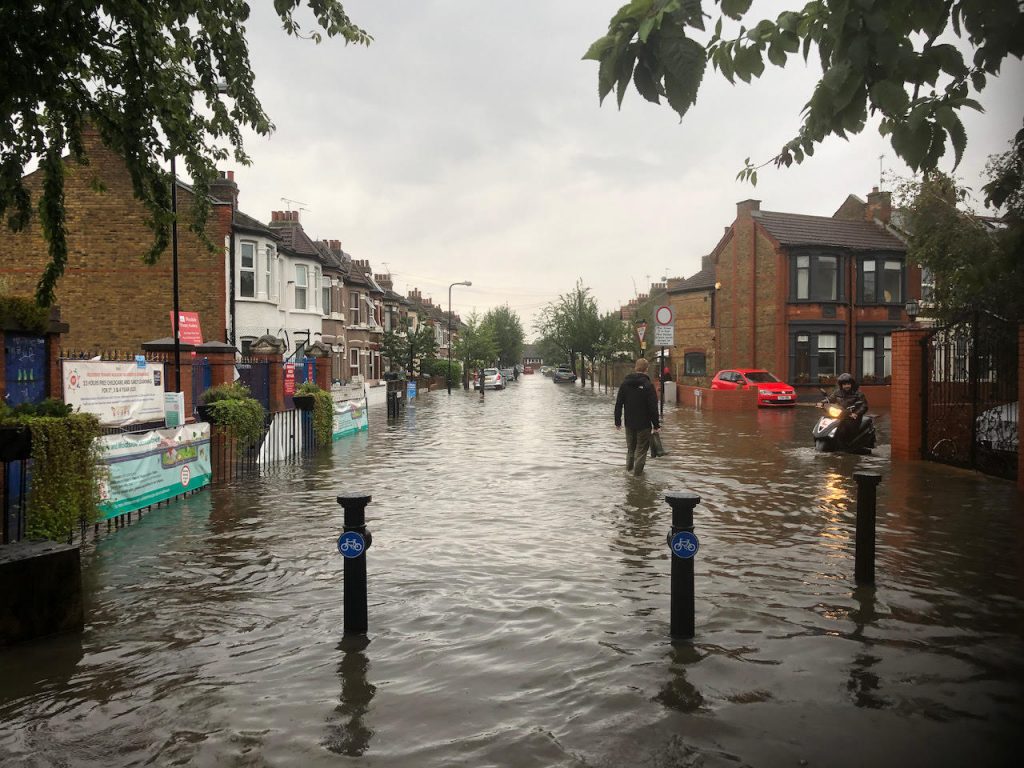
The ways that we live and work and consume have pushed creation to breaking point. Whether it is plastic pollution littering seas, species going extinct at record rates, or the climate crisis making droughts, floods, and storms more frequent and severe, we’ve misused and damaged this beautiful gift of God. We’re feeling some of the effects in the UK and Europe, with floods in Germany and wildfires in Greece and Turkey, but the impacts are hitting people in poverty the hardest.
As someone who has grown up in India, Sri Lanka, Thailand, and Jordan, I’ve seen first-hand the impacts floods, tsunamis and droughts have on communities and their horrible repercussions such as hunger, poverty, famine, and conflict, impacting the poorest and most vulnerable communities.
It’s hard to grasp what that really means: it’s big and abstract. So let me quickly introduce you to Orbisa, whose story has been provided by Tearfund.
Orbisa’s a 35-year-old mother who lives in the Afar region of Ethiopia. A few years ago, Orbisa could rely on the rains: now, because of the changing climate, they are far less predictable. So, she walks up to ten hours a day, every day, to find water for her family to drink. Her livelihood depends on selling livestock – but drought has killed nine of her ten cows. Let’s pause for a second…the stark reality is that Orbisa is paying the price for emissions which have mostly been generated by developed nations like the UK.
This is what she said to Tearfund: ‘The area was very fertile and green. But it hasn’t rained for six months, and I don’t know when it will rain next. I feel worried whenever I think about the future.’
Around the world, millions of people like Orbisa are being pushed back into poverty because of climate change. The science is clear: the climate crisis is being caused by us and the impacts are accelerating. We are running out of time to prevent the worst effects. We must act fast and change the way we live, and governments and companies have to be much more ambitious.
But right now, we have a unique window of opportunity. How we choose to rebuild after the pandemic will shape our economy, climate, and society in the decades to come. This is a crucial moment, especially with the UN’s important climate change conference, COP26, coming to our doorstep in Glasgow this November.
In the Bible, Jesus tells us the most important commandments are to love God, and to love our neighbours. Tackling the climate crisis is vital to both – honouring God by protecting his creation, and loving our global neighbours, who are hit first and worst by what is now a climate emergency.
3. RESPOND
It is easy to slip into despair when we consider the magnitude of the situation. Which is why we must centre our RESPONSE on the hope we find in Jesus.
Colossians 1:19–20 says this:
‘For God was pleased to have all his fullness dwell in him [Jesus], and through him to reconcile to himself all things, whether things on earth or things in heaven, by making peace through his blood, shed on the cross.’
‘…to reconcile to himself all things, things on earth and things in heaven…’
To me, this says I need a much bigger view of Jesus. He didn’t come just to reconcile me with my Father in heaven, but to reconcile and restore ALL things – in heaven and on earth!
That’s far more than just us. Jesus came to begin the restoration of the world to how God intended it to be. To make all things new, and He is at work, even at this very moment.
Because of Jesus’ death on the cross we can have hope that all things can be made new; everything sin has broken and corrupted is being restored and reconciled to God. And what’s more, we can be part of it. Jesus invites us to participate in his mission in this world.
The world is crying out, but God is at work, and we’re invited to join him in a ministry of reconciliation – reconciling people to their Father, but also reconciling people to the creation we’ve been given to steward, and seeing it restored. This is the fullness of the gospel, not a side issue.
So how can we respond? I want to invite you this morning to commit to two things this morning: to prayer and to action, so that we can address the huge injustice of climate change and its impact on the poorest people around the world. There are many ways to do this both as churches and as individuals.
At church:
1) Operation Noah’s Tenants of the King Study Guide is a great starting point to study, learn, pray and to inspire us to take action on climate change.
2) Bright Now, Operation Noah’s divestment campaign, supports churches to divest from fossil fuel companies and invest in clean alternatives.
3) Partner organisations like ARocha has EcoChurch and many other initiatives to support churches to take a lead on climate action.
As individuals:
1) Live more sustainably. Resources from partners like Climate Coalition will show you how to do so. But more importantly, call on political leaders and financial decision-makers to take climate action by reflecting on who you vote for, who you bank with and get in contact with your local MP to see what they are doing about the climate crisis.
2) Finally, as a member of the Young Christian Climate Network (YCCN), I’d like to invite you to join the Relay to COP26. We are an action-focused community of young Christians in the UK aged 18-30, choosing to follow Jesus in the pursuit of climate justice. As world leaders meet in Glasgow in November to discuss climate change, YCCN is running a national pilgrimage to call for climate justice, and there is still time to participate in events and the walk itself, which is an all-inclusive event.
When we speak up together, we can make a real difference. Let’s call on our leaders to take action. Let’s stand alongside Orbisa, and all of those impacted by climate change around the world, both in our prayers and by taking action. I’ll give you us a moment to pause and pray now.
Let’s pray.
Father God, we thank you that you are a God of justice.
Thank you that you know Orbisa and her family, and all those already impacted by climate change. Jesus, we are sorry for the ways we’ve damaged your creation. Help us make changes in our own lives to love our global neighbours well. Holy Spirit, stir the hearts of our government, guide them in all their decision-making and inspire them to protect the most vulnerable. Amen.