Archive: 2020 - Page 5 of 10 - Operation Noah

More despatches from the climate breakdown front

Posted in: Blog, Science

While all eyes have been turned, for the last five months, to the Covid-19 pandemic Bill McGuire, Professor Emeritus of Geophysical & Climate Hazards at UCL and a regular guest blogger for Operation Noah, has noticed that news about global heating and resulting climate breakdown has been coming thick and fast.

Hardly surprisingly, most of the news about global heating and climate breakdown has been bad recently – some very bed – but there have also been small nuggets of good news hidden amongst the gloom.

Silver lining

Photo by Dimitry B on Unsplash

Every cloud, even the darkest, has a silver lining. As much of the world went into lockdown during March, so transport and much of industry and commerce ground to a halt. The welcome result was a sudden fall in air pollution and carbon emissions. Despite easing of lockdown, the International Energy Agency calculates that global emissions for 2020 could be down by as much as six percent, which would wipe out the growth in emissions over the last five years or so.

This is a figure not to be sniffed at, but it needs to be considered in context. To avoid catastrophic climate change, emissions must fall by around 7.5 percent every year for the next decade. The rather depressing reality is, therefore, that even a global pandemic has not been sufficient to bring about emissions reductions on the scale that we need. Still, it is a welcome hiatus, and one that we need to make the most of by pushing for a ‘new normal’ that is far greener than the old.

Fire and ice

Meanwhile, the vast quantities of carbon we have already pumped into the atmosphere have continued to play havoc with the weather and climate systems. During June, temperatures in the Siberian Arctic reached an all-time record high of 38°C, driving wildfires across millions of acres of tundra, which released vast quantities of soil carbon into the atmosphere. In fact, Siberia has been baking in unseasonal heat since January, marking a heatwave that a new study by the UK Met Office confirms, would have been impossible without human-induced global heating. Not to be left out, Antarctica also recorded its hottest ever day in February, when the temperature in West Antarctica touched a balmy 20.75°C.

Warnings from Antarctica

There has been more bad news from down under too. New research looking at past warming episodes – published in the journal Science –reveals that the colossal floating ice shelves that encircle much of the Antarctic landmass, are capable of sliding into the sea five times faster than they are at present. This means that as our world continues to heat up, so these ice shelves could start disappearing at a rate as high as six miles a year. It is a sobering fact that, the last time the ice shelves retreated at this rate – around 12,000 years ago – sea levels were climbing at an astonishing six centimetres a year, which is 12 times the current rate.

A sensitive climate

Probably the most disturbing news came courtesy of new modelling undertaken for the Intergovernmental Panel on Climate Change (IPPC) 6th Assessment, due out next year. There is an almost magical number in climate change science, which is the value of so-called climate sensitivity. This, in simple terms, is the amount the planet will eventually heat up if the concentration of atmospheric carbon dioxide is doubled from pre-industrial times, when it was around 280 parts per million (ppm). In other words, 560ppm. Originally thought to be around 3°C, the latest models suggest that the worst-case figure for climate sensitivity could be as high as 5°C, which is a terrifying finding.

Atmospheric carbon levels are currently around 417ppm, and before the pandemic lockdown they had been climbing at about 2.4ppm a year. If we get back to this rate once Covid-19 dies back, then a doubling of atmospheric carbon dioxide could be achieved as soon as 2080. This would lock in an eventual global average temperature rise great enough to bring our civilisation to its knees.

This is, it has to be said, a worst-case scenario, and an even more recent study – the results of which have just been released – argues that climate sensitivity is more likely to lie between 2.6°C and 3.9°C. This is less bad news, but still very bad. Furthermore, past experience has shown that global heating and climate breakdown observations typically meet, and often exceed, earlier worst-case predictions.

Two for the price of one
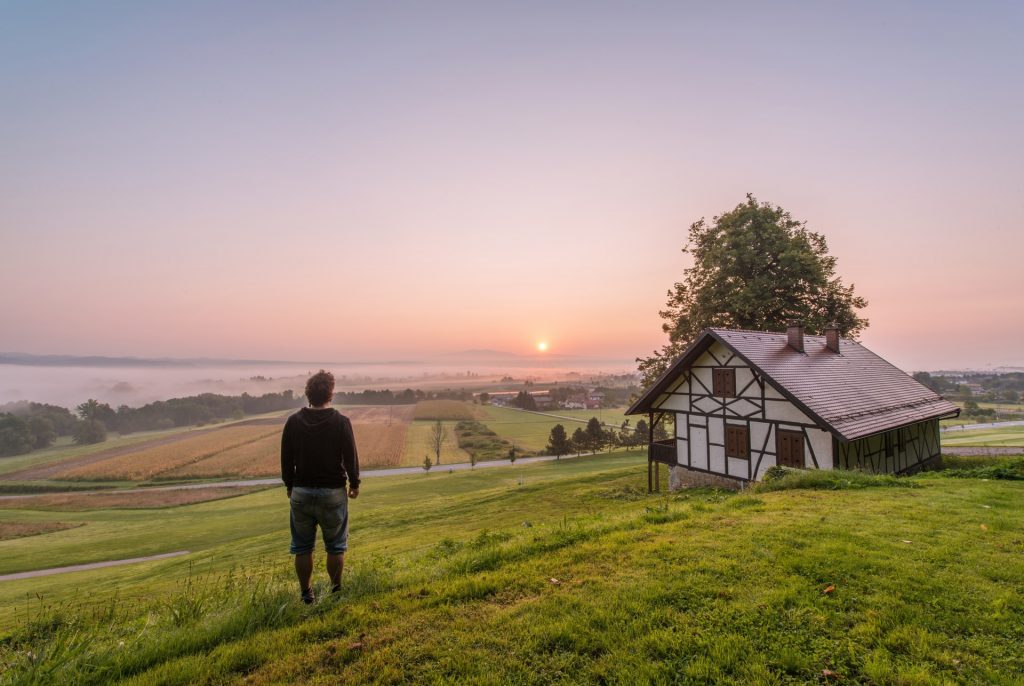
Photo by Ales Krivec on Unsplash

I started off this post with some good news, so let’s end with another optimistic story.

New analysis, published earlier this month in Nature, demonstrated that sprinkling rock dust on farmland – on a big enough scale – could capture as much as two billion tonnes of carbon a year. This rather simple method works because as the rock dust – common basalt is best – weathers, so it absorbs carbon from the atmosphere and locks it in. The method is also relatively cheap and fertilises the soil at the same time.

Of course, two billion tonnes is only about one twentieth of current annual carbon emissions and it would require a huge and co-ordinated international effort to accomplish. However, barring the unlooked for Covid-driven emissions cuts, it is the first positive news on the climate front in a very long time. It also flags the fact that, while we may be in desperate straits, there are always approaches we can take to begin to challenge global heating and catastrophic climate breakdown. That is, if we really want to.

Bill McGuire is Professor Emeritus of Geophysical & Climate Hazards at UCL and author of Waking the Giant: How a Changing Climate Triggers Earthquakes, Tsunamis and Volcanic Eruptions. He was a contributor to the IPCC 2012 report on climate change and extreme events and disasters. His new book, SKYSEED, an eco-thriller about climate engineering gone wrong, is published in September.

July 2020 Newsletter

Posted in: Newsletters

Read our July Newsletter

We have news of new trustees, a Methodist motion to divest from fossil fuels and Climate Sunday is just over a month away now!

To receive future newsletters straight to your inbox, please use the email sign-up form on the left or click here.

Chair’s annual report, 2020

Posted in: Reports

This is a very different report in some ways, as it is probable that we shall not be able to meet in person for our AGM as a result of the Covid-19 pandemic and the resulting restrictions. Our work at Operation Noah is able to continue much as normal, with all staff members working from home, and we do not anticipate any significant impact on our finances for the current year. Despite the postponement of the COP26 and the cancellation of many meetings, 2020 remains crucial for progress on addressing the climate crisis. In looking back over last year, there are a number of things that I need to highlight about Operation Noah’s year work during 2019.

Summary of activities:

  • In early February 2019 ON supporter Alex Mabbs and board member Nicky Bull made their way to Tunbridge Well URC for ‘Faith, Hope and Action in a Changing Climate’, an evening with Greg Clark MP and Dr Ruth Valerio of Tearfund. It was an excellent event, which had attracted a very large audience from the local area. Just over a week later, Operation Noah trustees Darrell Hannah and Holly Petersen travelled to Bristol to take part in the Festival of Transformation event, which explored how Christians can respond and contribute to the achievement of the Sustainable Development Goals. During the event Darrell and Holly had an opportunity to address attendees and spent time highlighting the relationship between climate change and other development goals – the fact that tackling climate change is a vital factor when considering how to achieve goals such as reducing poverty and addressing health difficulties. They were able to outline the exciting role that fossil fuel divestment plays in shifting society towards a fossil free future.
  • Also in February Operation Noah co-organised a day conference in London with CAFOD, the Global Catholic Climate Movement and other partners to bring together Catholic religious communities to discuss the issue of fossil fuel divestment. Sixty-five people from more than 20 Catholic religious communities attended what was the first event of its kind in the UK. It sought to encourage Catholic institutions from England and Wales to join future divestment announcements coordinated by the Global Catholic Climate Movement.
  • In March we celebrated the announcement of the United Reformed Church Synod of Yorkshire to divest from fossil fuels. Also in March Nicky Bull attended a Guardian Live event with Christiana Figueres (former Executive Secretary of the UN Framework Convention on Climate Change and now Convenor of Mission 2020), Amanda Mukwashi (Chief Executive of Christian Aid) and Joanna Haigh (Professor of Atmospheric Physics and Director of the Grantham Institute). They brought their quite different perspectives in order to give an assessment of where we are currently placed in the fight against climate change. 
  • In April eight local churches joined the United Reformed Church Synod of Yorkshire in the year’s Easter Declaration and pledged to divest from fossil fuels. Also in April, Isaac Harvey, a member of URC Youth and award-winning vlogger who edits videos using his feet, released a short film urging the United Reformed Church to divest from fossil fuels. The film featured ON’s Bright Now Campaign Manager, James Buchanan.
  • In June Operation Noah’s AGM and Supporters’ Day, with the title ‘Climate Emergency: A Christian Response of Faith, Hope and Urgency’, was held at the CAFOD offices, where we welcomed Hannah Malcolm, winner of the Church Times Theology Slam as our keynote speaker. And an interactive map showing divested churches was launched on the Bright Now website.
  • In July Beulah United Reformed Church in Cardiff became the first church in Wales to commit to divest from fossil fuels, and the Methodist conference declared a climate emergency and called on the UK to achieve net zero emissions well before 2050. 
  • At the end of August Operation Noah had a joint stall at Greenbelt Festival with our friends at Green Christian. Together with partners across the climate movement, we engaged with festival goers on how Christians can respond to the climate emergency.
  • In September Operation Noah supporters, board members and staff members joined the striking students on the streets of UK cities. The global climate strike is believed to have been the largest climate protest in history.
  • In October, the warmest October on record according to the EU’s climate monitoring service, activists from groups such as Extinction Rebellion, Christian Climate Action and Faith for the Climate continued to protest for urgent government response on the escalating climate and ecological emergency. Also in October, the United Reformed Church Synod of Wales decided to end investments in fossil fuel companies. A Synod meeting on Saturday 19 October passed a resolution on divestment proposed by members of Beulah URC in Cardiff, which was the first local church in Wales to divest. And our Bright Now Campaign Manager, James Buchanan, and trustee, Louisa Poole, ran a stall at the Association of Provincial Bursars (APB) Conference in Hertfordshire. 
  • In December Ivybridge Methodist Church in Devon committed to end its investments in fossil fuels, becoming the first local Methodist church in the UK to divest. Also in December, and along with over sixty other leaders working on the climate crisis, Operation Noah signed a letter to Fatih Birol, CEO of the International Energy Association (IEA), calling on the IEA to publish a central scenario that would limit global temperature rise to 1.5°C, after it had omitted such a scenario in the 2019 World Energy Outlook (WEO).
  • We continue to send representatives from the ON board to the meetings of the Faith for the Climate Network, which provides a very useful forum where we can meet and discuss with people from a range of organisations whose focus is on mobilising all the faith communities on climate change. The Network now has staff and a website (https://www.faithfortheclimate.org.uk/).
  • We are grateful to the Passionists, the Sisters of the Holy Cross, the Society of the Holy Child Jesus, the Society of the Sacred Heart, the Gibbs Trust, the Columbans, and E M Ellis for the grant funding and major donations we received from them during 2019. We also continue to be very fortunate in having regular donor supporters who give to the unrestricted funds that are needed to cover the ongoing running costs of Operation Noah.
  • Lastly, and most importantly, there are some very important thank-yous this year: Ruth Jarman, a founder member of the Operation Noah board, stood down from the board of trustees during 2019 in order to take up a post as Operation Noah’s Administrator, helping out in the office to make sure that our administration runs smoothly and that requests for resources are responded to promptly and dealing with all incoming enquiries. Following Richard Collett-White’s departure in March 2019 Britta Graham-Hyde was recruited to take over the communications work. She was with us for a year and in February 2020 Caroline Harmon was appointed as Operation Noah’s Communications Officer. During late 2019, we recruited Helena Ritter to the role of Bright Now Campaign Officer and when she left to take up a post with Hope For The Future, we were very pleased that Bokani  Tshidzu was able to take over this role and she is now working four days a week to support James Buchanan.
  • Many thanks to all of my fellow board members who continued to work extremely hard throughout 2019: I would particularly like to add thanks to Reggie Norton who retired during 2019 having been a member of the board throughout Operation Noah’s existence; Sr Louisa Poole, who has retired this year having also been a founder member of the board; and Jean Leston, who is stepping down from the board this year but who has generously assured us that she will continue to be available to represent Operation Noah on the steering committee for the Climate Sunday project. I should also like to thank Dr Martin Poulsom, who has continued to be responsible for oversight of the Bright Now campaign; Holly Petersen and Nick Jones whom we welcomed as elected members of the board last year; our Treasurer, David Miller, who works tirelessly throughout the year; and Revd Darrell Hannah, who acted as Vice-Chair throughout 2019 and will be taking over as Chair of Trustees from this month.

Nicky Bull

April 2020

Operation Noah’s Supporters’ Event and AGM

Posted in: Blog, Featured
Date posted: 23 July 2020

Photo by Sincerely Media on Unsplash

In keeping with the times, Operation Noah held its 2020 Supporters’s Event and AGM online. Around 60 people joined us for the event which was themed around ‘Climate Courage for the 2020s’.

The event took place on 15 July 2020 and our Keynote Speakers were:

  • David Pickering, Moderator, The United Reformed Church National Synod of Scotland
  • Bokani Tshidzu, Bright Now Campaign Officer
  • James Anthony, Coordinator for Climate Sunday

View a video of the keynote speeches here

Read the Chair’s Report from our AGM here

We also ran a number of workshops as part of the event and below are resources related to some of those workshops:

  • Read a briefing on the upcoming 2021 COP conference here
  • Read some notes from our workshop on how to deliver Operation Noah’s presentation here

Are Faith and Climate Action compatible?

Posted in: Blog, Uncategorized

Shilpita Mathews, a Research Assistant at the Grantham Research Institute on Climate Change, believes that the climate crisis requires faith communities to be catalysts for change, as she writes in this guest blog for Operation Noah.

A person standing in front of a building

Description automatically generated
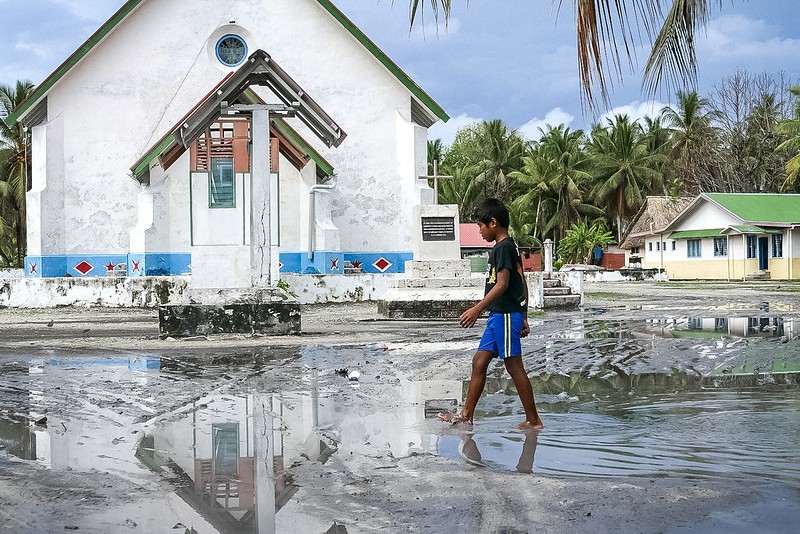
The main square of Nui Island in 2015, still under water over a month after Cyclone Pam created huge waves. Photo credit: Silke von Brockhausen/UNDP/Creative Commons via Flickr

As UK faith leaders call for an environment focused economic recovery post Covid-19, there have been great strides in faith-based climate activism. Yet Christians are often perceived as an obstacle to climate action with climate denial or apathy frequently attributed to religious communities. Within the Church, questions persist. By reflecting on my personal journey and addressing common scepticisms I argue that Christians play a key role in leading climate action.

The journey thus far

Having witnessed the Asian Tsunami in 2004 and the Bangkok floods in 2011, I have seen first-hand the devastating impacts natural disasters have on the poorest communities, especially in the global South. The strong relationship between environmental and social justice is evident, as climate change continues to impact the most vulnerable in our society.

Amidst eco-anxiety and dismal climate forecasts, faith serves as a reminder that ultimately, climate action is not about us saving the world, but fulfilling a God-given mandate of environmental stewardship. This view is shared by Christians working in conservation and climate change, from the former Chair of the IUCN to leading climate scientists.

Whilst recent actions by Christian leaders has been promising, from the Pope’s Laudato si’ to fossil fuel divestment by the Church of England, there is a long way to go. For this to ensue, key scepticisms must be addressed.

Shouldn’t poverty alleviation be the biggest global priority?

  1. Western-centric humanitarianism: Ironically, this thinking has been most prominent in post-industrial countries. Conversely, Christians in developing countries, often comprising of agrarian communities, are most attune to the dependence on nature for human flourishing. To ensure a sustainable future for subsequent generations, climate action and poverty alleviation must go hand-in-hand.
  2. Delinking of creation from salvation: God’s redemptive work has been the motivator behind Christian humanitarianism. But one of the biggest danger in churches today is overlooking His creation. It is important to remember that the ultimate act of redemption was motivated by God’s love for the world, or the entire cosmos, as argued by Peter Harris, cofounder of ARocha.
  3. A myopic view of climate action: The urgency of climate action is often lost in discussions around mitigation technologies as climate adaptation policies lag behind. Yet not only is climate change disproportionately affecting developing countries today, its worst effects are endured by the poor, women, children and ethnic minorities.
  4. Biblical commitment towards creation: Former Archbishop of Canterbury Rev Rowan Williams calls for a Jubilee year as we seek an end to social and environmental oppression. There are stark parallels between the Jubilee 2000 campaign, recent calls for debt forgiveness and the need for greater climate adaptation financing in developing countries.

Isn’t the world going to end anyway?

  1. Creation care and eschatology: There are numerous theological arguments presenting a comprehensive case for creation care and its alignment with eschatology, or the end of times. This presents not only an intergenerational vision, but an eternal vision for the world. A compelling argument for climate action, regardless of the outcome, comes from God’s ongoing work in reconciling all things on earth and heaven (Colossians 1:15-20).
  2. An eternal home: The promise that one day the earth will be renewed, reinvigorates the call to not only love our neighbours but love the eternal home in which we will dwell. If anything, the promise of ultimate restoration should make Christians the strongest proponents of climate action!

Are climate activists trying to play God?

  1. Stewardship v Sovereignty: Climate solutions are often deemed to usurp God’s power, particularly ideas like geo-engineering. Whilst criticism is healthy, and more rigorous research is required, this must be separated from overarching dismissals. Human environmental stewardship is different from divine sovereignty. Fighting for climate justice is out of reverence for the Creator and His world as opposed to insolence against His will.
  2. Climate change as a consequence of sin:  A relationship with God helps unearth the root cause of the climate crisis – a crisis of greed and overconsumption within our hearts. From this perspective, our current lifestyles, sustained by lordship over natural resources, may themselves be regarded as an attempt at playing God.
  3. Beyond climate activism: Climate action as embraced by today’s youth, calls for an attempt to live in harmony with our Creator and His world. This change in mindset means everyone has a role to play. The neighbourly love that is the foundation of faith needs to be at the centre of climate solutions.

With 84% of the world’s population identifying with a religious group, Christians must be onboard to spearhead a 1.5 °C world. In a world where religion is often the cause rather than the solution to problems, faith communities can be catalysts for change.

About the author

A person standing in front of a mountain

Description automatically generated
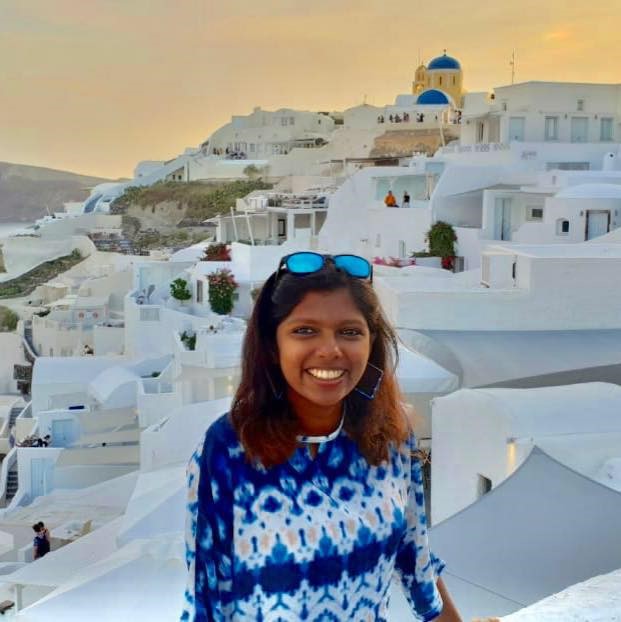
Shilpita Mathews is a Research Assistant at the Grantham Research Institute on Climate Change and the Environment and is currently completing a MSc in Environmental Economics and Climate Change at the London School of Economics. She also writes as a Climate Correspondent for Youth Ki Awaaz, an Indian youth media platform and serves in the student ministry of her home church, All Souls Langham Place in London.

June 2020 Newsletter

Posted in: Newsletters

Read our June Newsletter

There’s still time to sign up for our online Supporters’ Event and AGM, we’ve news of the launch of Climate Sunday and a recording of our Bright Now webinar is now online.

To receive future newsletters straight to your inbox, please use the email sign-up form on the left or click here.

Registered charity number 1138101